If you have been thinking about working in healthcare but do not want to spend years in school before getting started, becoming a Certified Nursing Assistant, or CNA, is one of the most practical ways to enter the field. It is often the first step for people who know they want to care for others, build hands-on experience, and begin working in a healthcare setting sooner rather than later.
For many people, the path to becoming a CNA feels approachable at first, but once they start looking into it, the questions pile up quickly. How long does training take? What does certification actually involve? Is the exam difficult? What does the job really look like day to day? And maybe the biggest question of all: is this the right career move for me?
The good news is that the process is usually much more manageable than people expect. While there are requirements to meet and skills to learn, becoming a CNA is not a mysterious or overly complicated process. It is a structured path, and once you understand the steps, it becomes much easier to move forward with confidence.
This guide walks through what getting certified as a nursing assistant really involves, what you can expect during training, and how to prepare for a career that is both demanding and deeply rewarding.
What a Certified Nursing Assistant Actually Does
Before thinking about the certification process, it helps to understand the role itself. A CNA is a healthcare professional who helps patients with basic daily care needs. That includes practical, hands-on support that makes a big difference in a person’s comfort, dignity, and overall well-being.
CNAs often help patients with bathing, dressing, grooming, eating, mobility, toileting, and repositioning. They may take vital signs, observe changes in a patient’s condition, help keep rooms clean and safe, and report concerns to nurses. In many settings, CNAs are the team members who spend the most direct time with patients.
That part matters. While registered nurses and licensed practical nurses handle medications, assessments, and more advanced clinical tasks, CNAs are often the people patients see most consistently throughout the day. They are there during routine care, difficult moments, and small interactions that can shape how supported a patient feels.
Because of that, the CNA role is not just about completing tasks. It is about patience, attention, compassion, and presence. A good nursing assistant knows how to work efficiently, but also how to make another person feel respected while receiving care.
CNAs work in a variety of settings, including nursing homes, assisted living communities, hospitals, rehabilitation centers, hospice organizations, and home health environments. Some people become CNAs as a long-term career choice, while others use it as a stepping stone toward becoming a practical nurse, registered nurse, or other healthcare professional.
Why CNA Certification Matters
You may hear people use “nursing assistant” and “certified nursing assistant” as if they mean the same thing, but the certification is the important distinction. In most places, you cannot simply decide to work as a CNA without completing approved training and passing the required exam. Certification is what shows employers and state agencies that you have met the standards to provide safe basic care.
That matters for patients, of course, but it also matters for you. Certification gives you credibility in the job market, expands the kinds of healthcare positions you can apply for, and demonstrates that you have both classroom knowledge and practical skills. It is often the minimum requirement for working in long-term care and many other clinical settings.
In simple terms, certification turns your interest in caregiving into a recognized qualification.
Who Should Consider Becoming a CNA
Not everyone is a good fit for this role, and that is not a bad thing. CNA work is meaningful, but it is also physically active and emotionally demanding. You are often on your feet for long periods, helping with lifting, moving, and direct personal care. You may work with older adults, people recovering from surgery, patients with memory loss, or individuals facing chronic illness.
That said, becoming a CNA can be an excellent option for people who:
-
want to start a healthcare career without a four-year degree
-
enjoy helping others in direct and practical ways
-
want real patient care experience before pursuing nursing school
-
are looking for a career path with a relatively short training period
-
value job skills that can transfer to different care settings
The strongest CNAs are usually people who combine reliability with empathy. They can stay calm, communicate clearly, and treat patients with dignity even during routine or stressful tasks. Technical skills can be taught, but compassion and professionalism make a major difference.
The First Step: Understand Your State’s Requirements
One of the most important things to know about CNA certification is that the process is not exactly the same everywhere. Requirements vary by state, which means the details of training hours, testing, background checks, and registry placement may differ depending on where you live.
That is why the first step is always to check your state’s nursing assistant requirements. Even if two programs look similar, only a state-approved one will usually count toward certification.
In general, most states require candidates to:
-
meet a minimum age requirement
-
complete an approved nursing assistant training program
-
pass a competency exam that includes a written or oral section and a skills demonstration
-
pass a background screening
-
meet health and immunization requirements in some cases
Some employers will help cover the cost of training, especially long-term care facilities that need staff, but the training still needs to meet state standards. This is one area where being careful early can save you time and money later.
What You Need Before Enrolling in a CNA Program
The admission process for CNA training is usually more straightforward than it is for college-level nursing programs, but most schools and training centers still have a checklist you need to complete.
Common requirements may include proof of identity, a high school diploma or GED in some cases, a criminal background check, immunization records, a TB test, drug screening, CPR certification, or a physical exam. Not every program asks for all of these upfront, but many ask for at least some of them before clinical training begins.
This can feel like a lot when you are just getting started, but most of it is there for patient safety and regulatory compliance. Healthcare facilities need to know that students entering clinical settings are healthy enough to participate and eligible to work around vulnerable populations.
A smart way to approach this stage is to start gathering documents early. It is much easier to enroll smoothly when you already have your identification, vaccination history, and other records organized.
Choosing the Right CNA Training Program
Not all CNA programs are created equal. Some are offered through community colleges, some through vocational schools, some through healthcare employers, and some through long-term care facilities. The goal is not simply to find the fastest option. The goal is to find a program that is state-approved, well-organized, and strong enough to prepare you for both the exam and the realities of patient care.
When comparing programs, look at more than just the price tag. Consider the quality of instruction, the number of clinical hours included, the program schedule, the reputation of the training provider, and whether they support students with exam preparation.
It also helps to ask practical questions. Is the schedule manageable if you are working another job? Are classes offered during the day, evening, or weekends? What supplies are included? What are the extra costs for uniforms, textbooks, testing fees, and background checks? What percentage of students pass the certification exam?
A lower-cost program is not always the best value if it leaves you underprepared. On the other hand, a more expensive program is not automatically better. The best choice is usually the one that is approved, reputable, and realistic for your schedule and budget.
What CNA Training Is Really Like
Many people assume CNA training is mostly about memorizing procedures, but good programs teach much more than that. Yes, you will learn the technical side of the job, but you will also learn how to communicate with patients, follow safety protocols, protect privacy, and respond professionally in healthcare settings.
Training is usually divided into two parts: classroom instruction and clinical practice.
The classroom portion covers topics such as infection prevention, basic anatomy and physiology, patient rights, nutrition, body mechanics, communication, personal care, restorative care, emergency procedures, and documentation. You will learn why certain tasks are done the way they are, not just how to complete them.
The clinical portion gives you the chance to practice those skills in a supervised setting. That might happen in a nursing home, rehabilitation center, or another care environment. During clinicals, students often assist with bathing, transfers, grooming, feeding, and other routine care tasks while being observed by an instructor.
For many students, the clinical portion is where everything starts to feel real. It is one thing to learn how to support a patient during mobility training in a classroom. It is another thing entirely to help a real person who is tired, anxious, in pain, or embarrassed. Clinical training teaches you how to combine skill with sensitivity.
The Skills You Will Be Expected to Learn
CNA programs focus heavily on core patient care tasks because these are the daily responsibilities you will most likely perform on the job. Depending on your state and testing requirements, you may be evaluated on a specific list of skills.
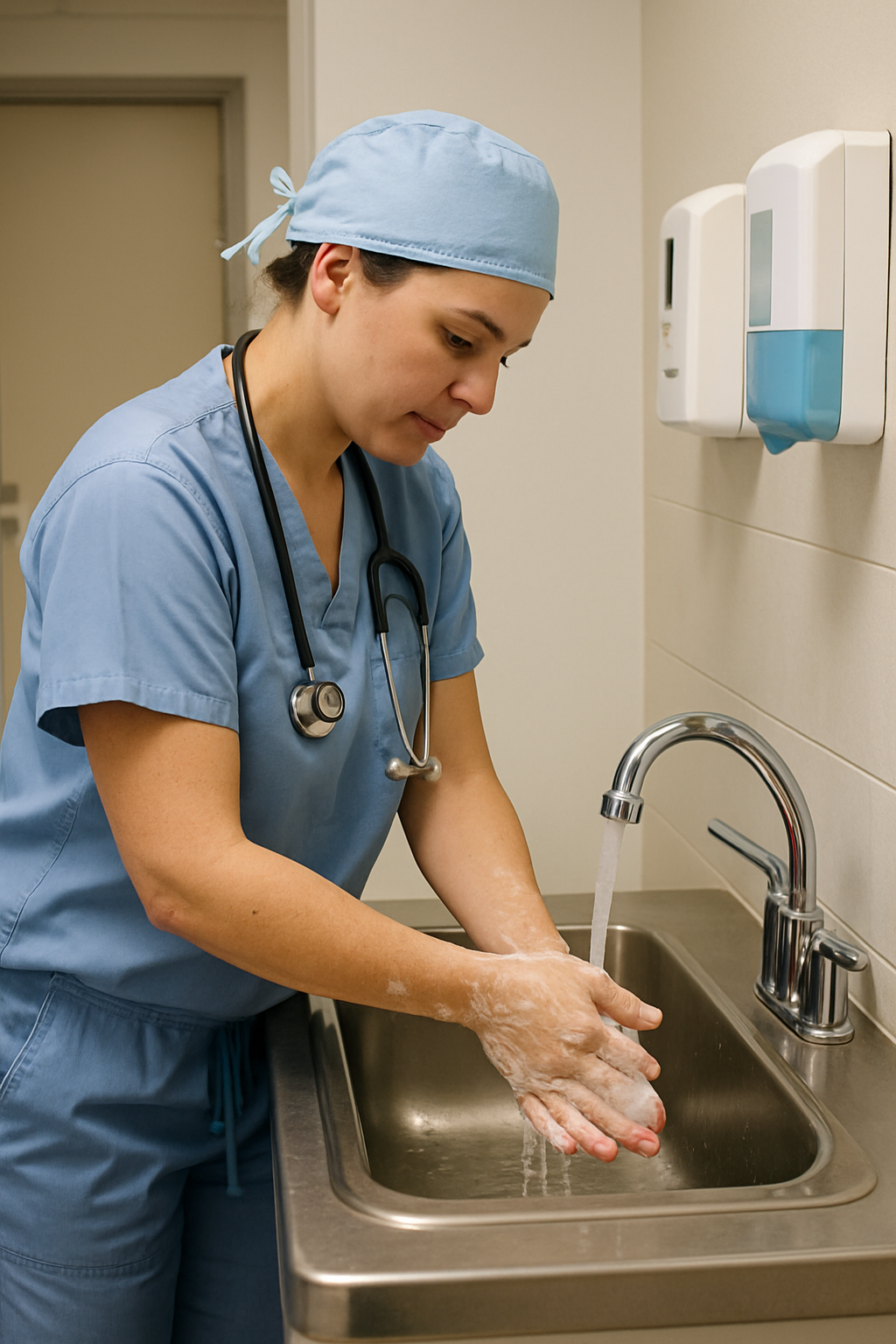
Common CNA skills include hand hygiene, taking and recording vital signs, assisting with ambulation, transferring patients safely, making an occupied bed, providing perineal care, feeding assistance, range-of-motion exercises, catheter care, measuring intake and output, and helping with personal hygiene.
At first, these skills can feel awkward simply because they are new. That is normal. Almost no one starts CNA training already comfortable with these tasks. Competence comes from repetition, correction, and practice.
One of the biggest turning points for students is realizing that good CNA care is not just about doing the steps in order. It is also about explaining what you are doing, preserving privacy, washing hands appropriately, using safety measures, and respecting the patient throughout the process. In healthcare, the way you do a task matters just as much as getting it done.
How Long It Takes to Become Certified
One reason so many people choose the CNA route is that it can be completed relatively quickly compared with many other healthcare programs. While timelines vary by state and school, many CNA training programs can be completed in a matter of weeks or a few months.
That makes it an appealing option for career changers, recent graduates, or anyone who wants to enter the workforce sooner. Still, speed should not be confused with ease. CNA training is shorter, but it is focused. You are learning practical healthcare skills in a condensed period, and you are expected to take the work seriously.
Most students who succeed treat the program like the start of their professional life, not just a class they need to get through.
Paying for CNA Training
Cost is often one of the first concerns people have, and understandably so. Even though CNA programs are generally more affordable than many other healthcare programs, training still comes with expenses. In addition to tuition, there may be fees for textbooks, uniforms, physical exams, testing, fingerprinting, and certification applications.
The good news is that there are often ways to reduce the financial burden. Some long-term care facilities offer free or low-cost training in exchange for a work commitment. Workforce development organizations, community colleges, scholarships, state programs, and employer-sponsored education options may also help cover some or all of the cost.
If you are comparing programs, ask for the full cost breakdown before enrolling. A program that seems inexpensive at first may end up costing more once all the extra fees are added in. Transparent pricing is a sign of a program that is organized and student-friendly.
Preparing for the CNA Certification Exam
Completing training is a major milestone, but certification is not official until you pass the exam required by your state. This is the step that often makes students nervous, especially if they have not taken a practical skills test before.
The exam usually has two parts. The first is a written or oral knowledge test that covers topics like safety, infection control, communication, resident rights, and basic care procedures. The second is a skills test where you are asked to demonstrate specific CNA tasks in front of an evaluator.
The skills portion is what many students worry about most, but it becomes much less intimidating when you understand what the evaluator is looking for. They are not expecting perfection in the sense of robotic performance. They are looking for safe, correct, professional care. That includes things such as washing your hands, identifying the patient properly, explaining the procedure, protecting privacy, using call lights, locking wheels when needed, and performing each step in the right sequence.
One of the best ways to prepare is to practice out loud. As you rehearse a skill, say each step as you do it. That helps you build both memory and confidence. It also trains you to remember the small but critical actions that students often forget under pressure.
Another helpful strategy is to practice under test-like conditions. Use a timer, follow the exact steps, and have someone observe you if possible. It is one thing to know the material casually. It is another to perform it while being watched.
What Happens After You Pass
After you pass the required exam, you are typically added to your state’s nurse aide registry. This is the official listing that confirms you are certified and eligible to work as a CNA. Employers often check this registry when hiring, so it is an important part of the process.
Once you are on the registry, you can start applying for positions in hospitals, long-term care facilities, rehabilitation centers, assisted living communities, and home care agencies, depending on local hiring practices and experience requirements.
For many newly certified CNAs, the first job is both exciting and humbling. Training prepares you, but real-world work teaches a new level of pace, responsibility, and adaptability. You may care for multiple patients, coordinate with nurses, handle physically demanding tasks, and learn how to manage your time in a busy environment.
The first few months on the job are often where new CNAs grow the most. Skills become smoother. Communication improves. Confidence develops. And the role begins to feel less like a checklist and more like a profession.
The Emotional Side of the Work
People often focus on the certification process and forget to talk honestly about the emotional side of being a CNA. This job can be deeply fulfilling, but it can also be hard. You may care for patients who are confused, grieving, lonely, frustrated, or seriously ill. You may support people through recovery, decline, and end-of-life situations. You may also need to handle demanding workloads and emotionally heavy days.
That reality does not mean the profession is discouraging. It means the work matters.
Some of the most respected CNAs are not the ones who move the fastest. They are the ones who stay kind under pressure, remain attentive when patients feel vulnerable, and understand that dignity is part of care. A patient may not remember every task you performed, but they will often remember how you made them feel.
Learning to protect your own emotional well-being is also important. Strong boundaries, healthy coping habits, supportive coworkers, and self-respect all matter in healthcare. Caring for others is meaningful work, but it should not come at the cost of neglecting yourself.
Common Mistakes New CNA Candidates Make
One of the most common mistakes is choosing a program without confirming that it is state-approved. Another is underestimating the importance of the skills exam and assuming the written portion is all that matters. Some students also wait too long to practice, thinking they will remember the procedures naturally by exam day.
A different kind of mistake happens after certification: assuming that being a good CNA is only about technical performance. In reality, professionalism matters just as much. Showing up on time, communicating clearly, respecting privacy, staying calm, and treating patients well all shape your reputation.
New CNAs can also struggle by trying to do everything alone. Healthcare is a team environment. Asking appropriate questions, reporting concerns quickly, and learning from more experienced staff are all signs of responsibility, not weakness.
How CNA Certification Can Open Bigger Career Doors
For many people, CNA certification is not the final destination. It is the entry point. Working as a CNA gives you firsthand experience with patient care, healthcare routines, medical terminology, documentation, teamwork, and the emotional realities of the field. That kind of experience is valuable whether you stay in the role long term or move into another position later.
Many future nurses begin as CNAs because it helps them confirm that healthcare is truly the right path. Others use the experience to pursue careers as licensed practical nurses, registered nurses, medical assistants, surgical technologists, or other allied health professionals.
Even if you already know you want to continue your education later, working as a CNA can make you stronger. It gives you a practical foundation that classroom learning alone cannot replace. You understand patient interaction differently when you have already been the person helping someone eat, move, rest, and feel safe.
Tips for Succeeding From Day One
If you are serious about becoming a CNA, approach the process with both humility and discipline. Learn the material thoroughly, but also pay attention to how care feels from the patient’s perspective. Practice the technical steps until they become familiar, but do not let repetition make you careless. Small details matter in healthcare.
Take notes during training. Practice your skills regularly. Ask instructors to correct your technique early. Treat clinical experiences like real professional opportunities. Be dependable. Be respectful. Learn how to manage stress before you are in the middle of a hard shift.
Most of all, remember that confidence comes after preparation, not before it. Nearly every capable CNA started out unsure. What separates successful students is not natural perfection. It is the willingness to learn, improve, and show up consistently.
Is Becoming a CNA Worth It?
For many people, yes. It is one of the fastest and most accessible ways to begin working in healthcare, and it offers something that many entry-level jobs do not: genuine purpose. You are not just clocking in and out. You are helping people through some of the most vulnerable moments of their lives.
That does not mean the job is easy. It is physically active. It requires emotional resilience. It demands professionalism, patience, and real responsibility. But for the right person, those challenges are part of what makes the work meaningful.
If you are looking for a career path that lets you make a direct difference, develop hands-on skills, and gain experience in the healthcare world, becoming a certified nursing assistant is a strong place to begin.
Final Thoughts
Getting certified as a nursing assistant is more than checking off a career requirement. It is the beginning of learning how to care for people in a practical, respectful, and professional way. The path usually involves meeting state requirements, enrolling in an approved program, completing classroom and clinical training, passing a certification exam, and joining the state registry. None of those steps are impossible, but each one deserves attention.
The most successful CNAs are not just people who pass the test. They are people who understand that healthcare is built on trust, consistency, and compassion. Certification gives you the credentials to start, but the way you show up every day is what shapes your career.
For anyone considering this path, that is the real opportunity. Becoming a CNA does not just help you enter healthcare. It teaches you how to become the kind of caregiver people remember for the right reasons





Leave a Reply